Volleyball Training Drills: Power Generation for Spiking and Serving
Imagine the roar of the crowd, the tension in the air, and the satisfying thud as your spike connects with the court, untouchable. In volleyball, power isn't just an advantage; it's a game-changer. A well-placed, forceful serve can disrupt the opponent's offense, while a powerful spike can demoralize the opposition and secure crucial points. While court awareness and teamwork are undeniably crucial, the ability to generate significant power in your spikes and serves can often be the deciding factor between victory and defeat.

A volleyball player prepares to deliver a powerful serve, embodying the explosive energy discussed in the guide to enhance spiking and serving power.
The Importance of Power Generation
Why is power so vital in volleyball? The answer lies in its direct impact on control. Power translates to faster ball speeds, sharper angles, and the ability to dictate the game's tempo. A powerful spike is inherently more difficult to dig, leading to increased scoring opportunities. Similarly, a powerful serve can force weak passes, setting up your team for an advantageous attack.
However, it's important to remember that raw strength alone isn't sufficient. Technique is the key to unlocking your full potential and channeling your energy efficiently and effectively.
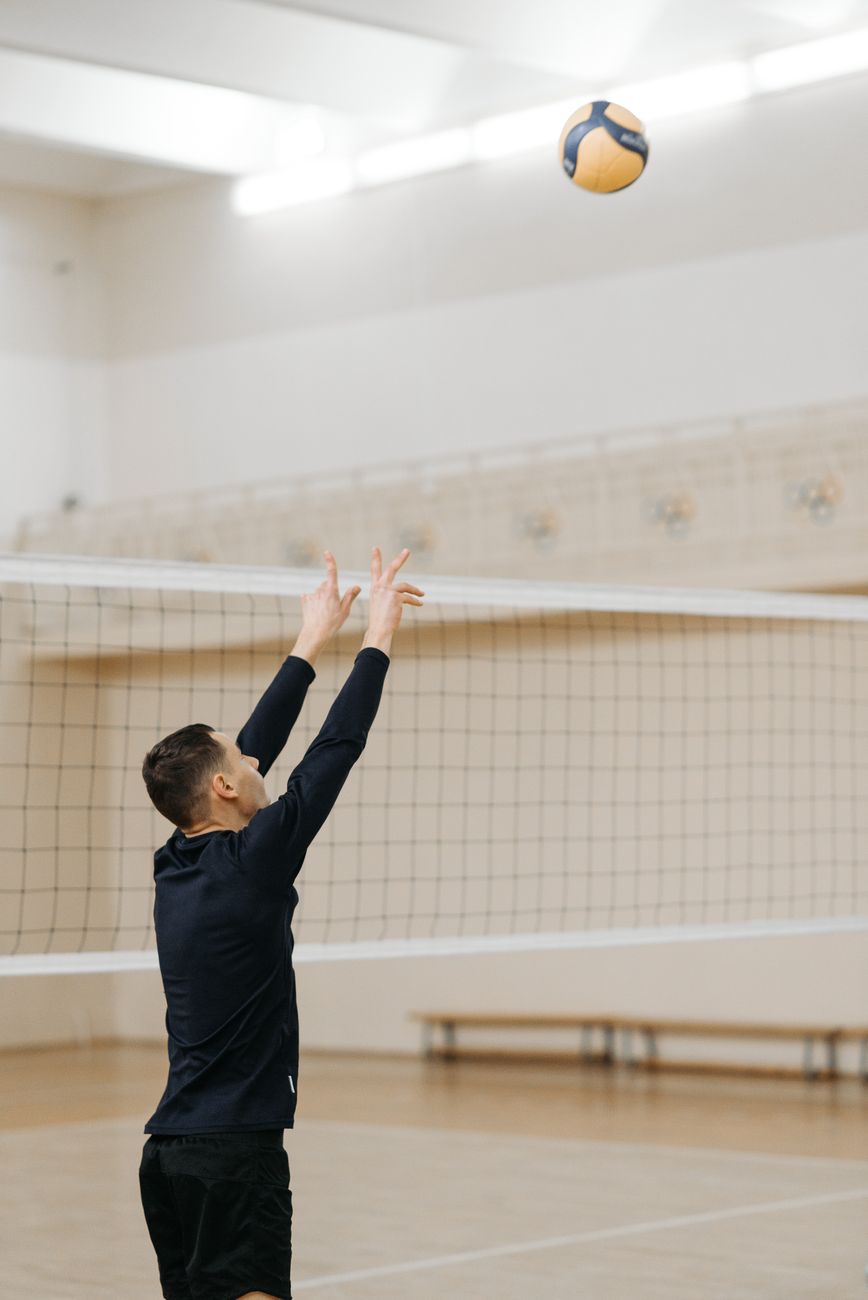
Proper technique is crucial for generating power in volleyball spikes.
What to Expect From This Guide
This guide is designed to provide you with a comprehensive collection of drills and exercises aimed at improving your power generation in both spiking and serving. We'll focus on the fundamental techniques and the principles of force summation, equipping you with the tools necessary to elevate your game.
Who Will Benefit?
Whether you're a beginner just learning the basics or an advanced player seeking to fine-tune your skills, this guide offers valuable insights and practical exercises. Coaches will also find these drills beneficial for developing their players' offensive and serving capabilities.
Understanding the Fundamentals of Power Generation
Before diving into the drills, let's establish a solid foundation by exploring the core principles behind power generation.
Force Summation: The Key to Maximum Power
Force summation is the concept of combining multiple forces generated by different body parts in a coordinated sequence to produce maximum power. Think of it as a chain reaction: each link (body part) contributes to the overall strength of the chain (the final hit).
In volleyball, force summation ideally starts from the ground up. The energy generated by your legs is transferred through your core, then to your shoulder and arm, culminating in the impact with the ball. The more efficiently you can transfer this energy, the more powerful your hit will be. As one Reddit user explained, understanding force summation helped them realize that "when I hit the ball, it’s not just my arms doing the work—my legs, jump, and body movement all play a part in making the ball go where I want it." They further noted that "the speed and direction of the ball depend on how well I control all those forces."
when I hit the ball, it’s not just my arms doing the work—my legs, jump, and body movement all play a part in making the ball go where I want it.
the speed and direction of the ball depend on how well I control all those forces.
To illustrate, imagine a whip. The handle starts the motion, transferring energy down the length of the whip until the tip cracks with incredible force. Similarly, in volleyball, your legs initiate the power, your core stabilizes and transfers it, and your arm delivers the final blow.
Biomechanics of Spiking and Serving
Understanding the biomechanics of spiking and serving is crucial for optimizing your technique. Key aspects include:
- Key Muscle Groups: The legs provide the initial power, the core stabilizes the body and facilitates energy transfer, and the shoulders and arm deliver the final blow.
- Proper Body Positioning: A balanced stance, a coordinated approach, and a well-timed jump are essential for maximizing power.
Common Mistakes That Limit Power
Many players unknowingly make mistakes that hinder their power generation. Here are a few common culprits:
- Poor Timing and Coordination: A disjointed sequence of movements can disrupt the flow of energy.
- Insufficient Leg Drive: Neglecting the power generated by the legs significantly reduces overall force.
- Weak Core Engagement: A weak core compromises stability and energy transfer.
Spiking Power Drills: Unleashing Your Offensive Potential
Now, let's get into the drills! These exercises are designed to improve your approach, jump, arm swing, and overall spiking power.
Approach and Jump Drills
These drills focus on building a solid foundation for your spike.
- Approach Footwork Drills:
- Three-Step Approach Drill: Focus on accelerating through each step, building momentum towards the jump. Perform 3 sets of 8-10 repetitions, resting for 30 seconds between sets.
- Four-Step Approach Drill: Emphasize rhythm and speed, ensuring a smooth transition from the approach to the jump. Perform 3 sets of 8-10 repetitions, resting for 30 seconds between sets.
- Jump Training for Height and Power:
- Box Jumps: Develop explosive leg power by jumping onto and off of boxes of varying heights. Start with a box height you're comfortable with and gradually increase it. Perform 3 sets of 5-8 repetitions, resting for 45 seconds between sets.
- Vertical Jump Drills with Arm Swing: Practice maximizing your jump height by coordinating your arm swing with your leg drive. Perform 3 sets of 8-10 repetitions, resting for 30 seconds between sets.
Arm Swing and Contact Drills
These drills help refine your arm swing and improve your contact with the ball.
- Toss and Hit Drills:
- Self-Toss Hitting Drill: Focus on proper arm swing mechanics, ensuring a high elbow and a full range of motion. Perform 3 sets of 10-12 repetitions, resting for 30 seconds between sets.
- Partner Toss Hitting Drill: Emphasize the contact point, aiming to hit the ball at the peak of your jump with a strong wrist snap. Perform 3 sets of 10-12 repetitions, resting for 30 seconds between sets.
- Blocking Simulation Drills:
- Hitting Over a Simulated Block: Improve your angle and power by practicing hitting over a raised object (e.g., a net held high by a partner). Perform 3 sets of 8-10 repetitions, resting for 30 seconds between sets.
- Reactive Hitting Drills: Develop your ability to react to a moving block, adjusting your angle and power accordingly. Have a partner move a blocking pad randomly, and react to hit around it. Perform 3 sets of 8-10 repetitions, resting for 30 seconds between sets.
Full Approach and Spike Drills
These drills put everything together, simulating game-like situations.
- Line Hitting Drills: Practice hitting down the line with power and accuracy, focusing on consistent contact and follow-through. Perform 3 sets of 6-8 repetitions, resting for 45 seconds between sets.
- Angle Hitting Drills: Develop your ability to hit sharp angles by emphasizing wrist snap and body control. Perform 3 sets of 6-8 repetitions, resting for 45 seconds between sets.
- Game-Like Scenarios: Incorporate spiking drills into game situations, practicing hitting from different positions on the court. Perform 3 sets of 4-6 repetitions from various positions, resting for 60 seconds between sets.
Serving Power Drills: Dominating the Service Line
A powerful serve can be a game-changer. These drills will help you develop a consistent and forceful serve.
Stance and Toss Drills
These drills focus on the fundamentals of a powerful serve.
- Proper Stance and Balance: Focus on foot placement and body weight distribution, maintaining a stable base for power generation. Practice holding the correct stance for 30 seconds, 3 sets, resting for 15 seconds between sets.
- Consistent Toss Technique: Practice self-toss drills, focusing on height and placement. The toss should be consistent and in front of your hitting shoulder. Perform 3 sets of 10-12 repetitions, resting for 20 seconds between sets.
Arm Swing and Contact Drills
These drills help refine your arm swing and improve your contact with the ball during your serve.
- Serving Motion Drills: Use shadow serving drills to refine your arm swing mechanics, focusing on a smooth and powerful motion. Perform 3 sets of 10-12 repetitions, resting for 20 seconds between sets.
- Contact Point Drills: Practice hitting the ball at the optimal contact point for power, using visual cues to improve contact accuracy. Perform 3 sets of 10-12 repetitions, resting for 20 seconds between sets.
Full Serve Drills
These drills put everything together, simulating game-like serving situations.
- Target Serving Drills: Improve your accuracy and consistency by serving to specific zones on the court. Aim for specific targets (e.g., cones) in different zones. Perform 3 sets of 8-10 serves, resting for 30 seconds between sets.
- Jump Serve Drills: Practice the jump serve approach and toss, focusing on generating power from the jump and arm swing. Perform 3 sets of 6-8 serves, resting for 45 seconds between sets.
- Game-Like Serving Scenarios: Develop a strategic serving approach by serving under pressure in simulated game situations. Have a teammate call out a target zone just before you serve. Perform 3 sets of 6-8 serves, resting for 45 seconds between sets.
Integrating Strength and Conditioning for Power
Drills are essential, but strength and conditioning are the foundation upon which power is built. Focus on exercises that mimic the movements in volleyball.
Leg Strength Exercises
Strong legs are crucial for generating power in both spiking and serving. Consider incorporating these exercises into your routine:
- Squats: Back squats and front squats build overall leg strength. Focus on explosive movements during the upward phase.
- Lunges: Forward and reverse lunges improve balance and unilateral leg strength. Add a jump at the top of the lunge for increased power.
- Plyometrics: Jump squats and box jumps develop explosive leg power. Focus on landing softly to minimize impact.
Core Strength Exercises
A strong core is essential for stability and energy transfer. Try these exercises:
- Planks: Standard and side planks improve core stability. Focus on maintaining a straight line from head to heels.
- Russian Twists: Develop rotational core strength. Use a medicine ball for added resistance.
- Medicine Ball Throws: Enhance explosive core power. Throw the ball against a wall, focusing on a powerful and controlled movement.
Upper Body Strength Exercises
Upper body strength contributes to a powerful arm swing. Consider these exercises:
- Push-ups: Variations target different muscle groups in the chest, shoulders, and triceps. Try plyometric push-ups for explosive power.
- Pull-ups: Build upper body pulling strength. Use assisted pull-ups if needed.
- Dumbbell Exercises: Shoulder press and rows develop shoulder and back strength. Focus on controlled movements and proper form.
Injury Prevention and Recovery
Preventing injuries is just as important as building power. Remember to prioritize your physical well-being.
- Warm-up and Cool-down Routines: Dynamic stretching before training and static stretching after training are crucial for injury prevention.
- Proper Technique: Emphasize correct form in all drills to avoid overtraining and overuse injuries.
- Recovery Strategies: Rest and sleep, proper nutrition and hydration, and active recovery (light cardio, stretching) are essential for muscle repair and recovery.
Sample Training Schedule: A Week of Power Development
Here's a sample training schedule to guide your power development. Remember to adjust it based on your individual needs and fitness level.
- Monday: Leg Strength and Spiking Drills
- Leg Strength: Squats (3 sets of 8-12 reps), Lunges (3 sets of 10-12 reps per leg), Box Jumps (3 sets of 5-8 reps)
- Spiking Drills: Approach Footwork Drills (3 sets of 8-10 reps), Self-Toss Hitting Drill (3 sets of 10-12 reps)
- Tuesday: Core Strength and Serving Drills
- Core Strength: Planks (3 sets, hold for 30-60 seconds), Russian Twists (3 sets of 15-20 reps), Medicine Ball Throws (3 sets of 8-10 reps)
- Serving Drills: Proper Stance and Balance (3 sets, hold for 30 seconds), Serving Motion Drills (3 sets of 10-12 reps)
- Wednesday: Rest or Active Recovery
- Light cardio (e.g., jogging, swimming) for 30-45 minutes, followed by stretching.
- Thursday: Upper Body Strength and Spiking Drills
- Upper Body Strength: Push-ups (3 sets to failure), Pull-ups (3 sets to failure or assisted pull-ups), Dumbbell Shoulder Press (3 sets of 8-12 reps)
- Spiking Drills: Partner Toss Hitting Drill (3 sets of 10-12 reps), Blocking Simulation Drills (3 sets of 8-10 reps)
- Friday: Full Serve and Game-Like Scenarios
- Serving Drills: Target Serving Drills (3 sets of 8-10 serves), Jump Serve Drills (3 sets of 6-8 serves)
- Game-Like Serving Scenarios (3 sets of 6-8 serves)
- Saturday: Plyometrics and Spiking/Serving Combination Drills
- Plyometrics: Jump Squats (3 sets of 8-12 reps), Box Jumps (3 sets of 5-8 reps), Plyometric Push-ups (3 sets to failure)
- Spiking/Serving Combination Drills: Alternate between spiking and serving drills, focusing on transitioning between the two skills.
- Sunday: Rest
- Allow your body to fully recover.
Mastering Power for Volleyball Success
By consistently practicing these drills and incorporating strength and conditioning into your routine, you'll be well on your way to mastering power in volleyball. Remember, it's not just about being strong; it's about using your body efficiently and effectively.
The journey to unleashing your full power potential in volleyball requires dedication, discipline, and a relentless pursuit of improvement. Embrace the challenge, push your limits, and watch as your spikes become more devastating and your serves become more untouchable. The court awaits your dominance!
Now, we want to hear from you! Share your experiences and results in the comments below. What drills have you found most effective? What challenges have you faced, and how have you overcome them? Let's learn from each other and continue to improve our game!